
Introduction
In recent years, an increasing number of men have chosen rhinoplasty to improve facial balance while maintaining a strong, masculine appearance. Unlike traditional cosmetic procedures aimed at creating dramatic change, modern male rhinoplasty focuses on subtle refinement. The objective is not to create a smaller or more delicate nose but to enhance facial proportions while preserving masculine character.
Every male face is unique. A successful outcome depends on careful analysis of facial structure, skin quality and nasal function. At AesthENT Dubai, rhinoplasty is individually planned to achieve natural-looking results that complement each patient’s features rather than alter their identity.
Understanding the Male Nose
The male nose differs significantly from the female nose in both anatomy and aesthetics.
Men typically have:
- Stronger nasal bones
- Thicker skin
- More robust cartilage
- A straighter nasal bridge
- Greater projection
- More prominent facial features
These characteristics require a tailored surgical approach. Applying the same techniques used in female rhinoplasty may lead to an overly refined or unnatural appearance.
The Goal: Refinement Without Losing Masculinity
One of the most common concerns among male patients is looking “overdone” after surgery.
A well-executed male rhinoplasty should:
- Preserve a strong profile
- Maintain appropriate nasal width
- Respect masculine facial proportions
- Improve symmetry
- Enhance facial balance without drawing attention to the nose
The ideal result is subtle enough that others notice an improved appearance but not the surgery itself.
Common Reasons Men Seek Rhinoplasty
Men choose rhinoplasty for many reasons, including:
- A dorsal hump
- A crooked nose after sports injuries
- A wide or bulky nasal tip
- Nasal asymmetry
- Difficulty breathing
- Previous nasal trauma
- Congenital irregularities
In many cases, cosmetic concerns are accompanied by functional problems that can be addressed during the same procedure.
Combining Aesthetics and Function
The appearance of the nose is closely linked to its internal support structures.
For many male patients, surgery offers an opportunity to improve:
- Nasal airflow
- Septal alignment
- Internal nasal valve function
- Structural stability
By combining aesthetic refinement with functional correction, patients often experience both improved confidence and easier breathing.
This integrated approach is particularly valuable when surgery is performed by a Consultant ENT Surgeon with expertise in facial plastic surgery.
Surgical Planning Is Individual
No two male noses are alike.
During consultation, several factors are carefully assessed:
- Facial proportions
- Chin projection
- Jawline definition
- Skin thickness
- Cartilage quality
- Nasal symmetry
- Airway function
- Previous injuries
This detailed evaluation allows the surgical plan to be tailored to each patient’s anatomy and personal goals.
Recovery After Male Rhinoplasty
Recovery is similar to other rhinoplasty procedures.
Patients can generally expect:
Week 1
- Nasal splint in place
- Mild swelling and bruising
Weeks 2–3
- Return to work and social activities
- Most bruising has resolved
Three to Six Months
- Continued refinement
- Reduced swelling
Up to Twelve Months
- Final definition develops
- Long-term results become fully visible
Following postoperative instructions carefully is essential for optimal healing.
Choosing the Right Surgeon
Male rhinoplasty requires experience, precision and an understanding of masculine facial aesthetics.
Patients should look for a surgeon who:
- Specialises in facial plastic surgery
- Understands nasal function
- Performs complex rhinoplasty regularly
- Prioritises natural-looking outcomes
- Takes time to understand individual goals
Selecting a surgeon with expertise in both facial aesthetics and ENT surgery helps ensure that appearance and function are considered equally.
When Should You Seek a Second Opinion?
A second opinion can be especially valuable if:
- You have received conflicting treatment recommendations.
- You are concerned about preserving a masculine appearance.
- You have undergone previous nasal surgery.
- Breathing difficulties accompany cosmetic concerns.
- You are uncertain about the proposed surgical plan.
A comprehensive assessment provides clarity and supports informed decision-making before surgery.
Does male rhinoplasty look different from female rhinoplasty?
Yes. Male rhinoplasty focuses on preserving stronger facial features and a masculine profile rather than creating a more delicate appearance.
Can breathing problems be corrected during surgery?
Yes. Functional issues such as a deviated septum or nasal valve collapse can often be addressed during the same procedure.
Will my nose look natural?
The goal of modern male rhinoplasty is subtle refinement. The nose should complement your face without appearing surgically altered.
How long does recovery take?
Most patients return to work within one to two weeks, while final results continue to develop over the following months.
Expert Insight by Dr Eduard Janz
Successful male rhinoplasty is about balance, not reduction. Every procedure begins with a detailed analysis of facial anatomy, skin quality and nasal function. The aim is to refine the nose while preserving the strength and character that define a masculine profile. Equally important is maintaining healthy nasal airflow to ensure that functional outcomes support long-term patient satisfaction.
Conclusion
Male rhinoplasty is a highly individualised procedure that combines surgical precision with an understanding of masculine facial aesthetics. Rather than following trends, successful treatment focuses on creating harmony while preserving the unique characteristics of each patient’s face.
At AesthENT Dubai, every rhinoplasty is carefully planned to balance appearance and function, helping patients achieve natural-looking results that enhance confidence without compromising identity.
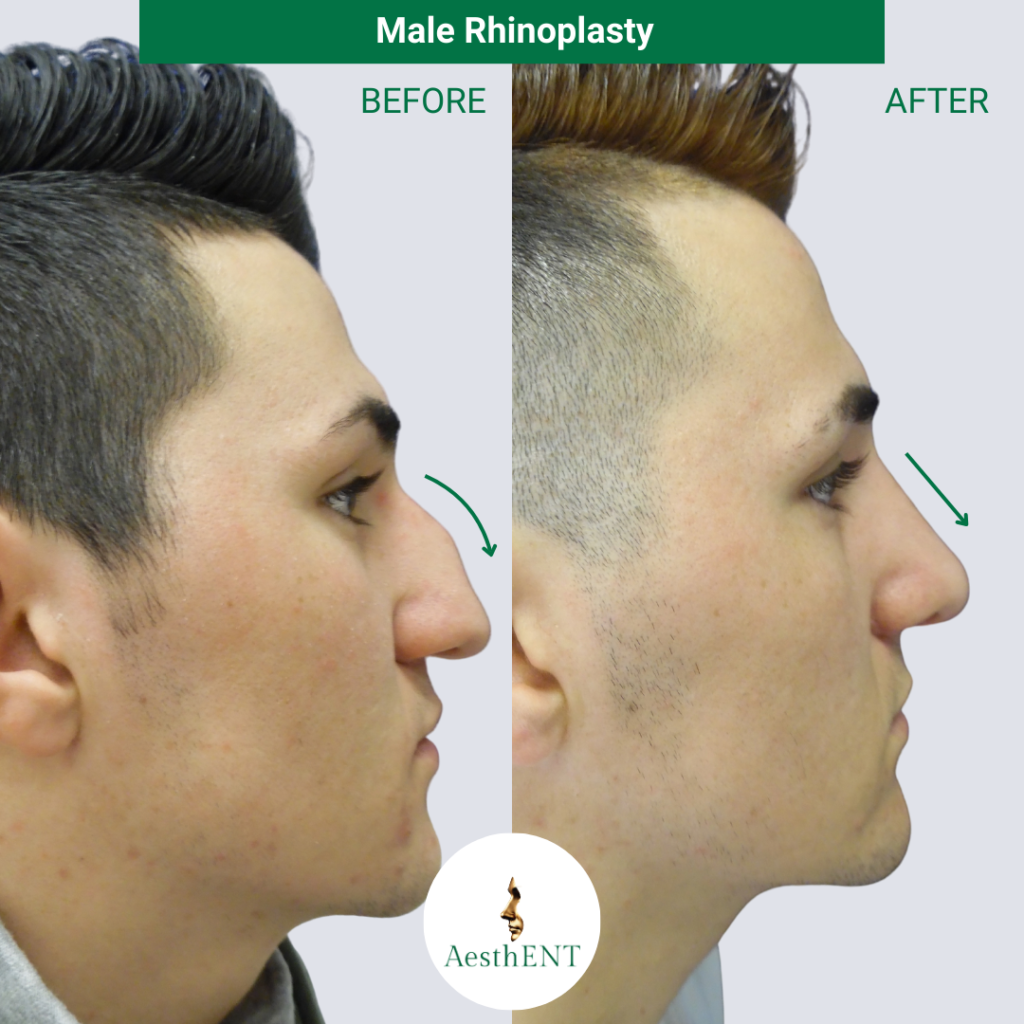
Whether you wish to refine the appearance of your nose, improve breathing, or seek an expert second opinion, a personalised consultation is the first step. At AesthENT Dubai, Dr. Eduard Janz provides comprehensive assessment and tailored treatment plans based on facial harmony, functional analysis and long-term surgical outcomes.
