
Understanding the Difference
When patients begin researching rhinoplasty, one of the most common questions is whether they need functional rhinoplasty, aesthetic rhinoplasty, or a combination of both.
Although these procedures share many surgical techniques, they are performed for different reasons. Functional rhinoplasty focuses on improving nasal airflow and correcting structural problems that affect breathing, while aesthetic rhinoplasty aims to enhance the appearance of the nose and achieve better facial harmony.
In many cases, however, these goals overlap. A carefully planned procedure can improve both appearance and function simultaneously, providing long-term benefits without compromising either.
What Is Aesthetic Rhinoplasty?
Aesthetic rhinoplasty is performed to refine the external shape of the nose and improve facial balance.
Patients commonly seek treatment for concerns such as:
- A prominent dorsal hump
- A bulbous or drooping nasal tip
- A wide nasal bridge
- Nasal asymmetry
- A nose that appears too large or disproportionate
Modern rhinoplasty is no longer about creating a “perfect” nose. Instead, the goal is to achieve a natural result that complements the individual’s facial features while preserving their unique identity.
What Is Functional Rhinoplasty?
Functional rhinoplasty addresses structural abnormalities that interfere with normal breathing.
These problems may be present from birth, develop after an injury, or occur following previous nasal surgery.
Common conditions include:
- Deviated nasal septum
- Internal nasal valve collapse
- External nasal valve weakness
- Enlarged turbinates
- Nasal obstruction
Patients often report:
- Difficulty breathing through one or both nostrils
- Mouth breathing
- Snoring
- Reduced exercise tolerance
- Persistent nasal congestion
The primary goal of functional rhinoplasty is to restore healthy airflow while maintaining the structural stability of the nose.
Can Functional and Aesthetic Rhinoplasty Be Performed Together?
Absolutely.
In fact, combining both procedures is often the most effective approach.
For example, a patient may wish to reduce a dorsal hump while also correcting a deviated septum that restricts breathing.
Addressing both concerns during a single operation allows the surgeon to create a nose that not only looks balanced but also functions optimally.
This comprehensive approach also avoids multiple recovery periods and helps ensure that cosmetic refinements do not compromise nasal airflow.
Why Surgical Expertise Matters
The nose is one of the most complex structures of the face.
Changing its appearance without understanding the underlying anatomy can lead to long-term functional problems.
Choosing a surgeon with expertise in both Facial Plastic Surgery and ENT surgery offers significant advantages.
A dual-trained specialist understands:
- Nasal anatomy
- Airway physiology
- Facial proportions
- Cartilage support
- Long-term healing
This allows every surgical decision to consider both aesthetics and function.
Signs You May Need Functional Rhinoplasty
You may benefit from a functional assessment if you experience:
- Chronic nasal blockage
- Difficulty breathing during exercise
- Frequent mouth breathing
- Poor sleep due to nasal obstruction
- Previous nasal trauma
- Dissatisfaction after previous rhinoplasty
Even patients primarily interested in cosmetic improvement should undergo a thorough functional examination before surgery.
Why a Comprehensive Consultation Is Essential
Every successful rhinoplasty begins with an in-depth consultation.
During your assessment, your surgeon should evaluate:
- Facial proportions
- Nasal symmetry
- Internal nasal structures
- Septal alignment
- Skin thickness
- Cartilage strength
- Previous injuries or surgery
- Breathing function
This detailed analysis helps determine whether aesthetic concerns are accompanied by functional issues and whether both should be addressed together.
When Is a Second Opinion Recommended?
If you have received different treatment recommendations or are unsure whether surgery is necessary, seeking an expert second opinion can provide valuable clarity.
A second opinion is particularly helpful for:
- Complex nasal anatomy
- Previous rhinoplasty
- Persistent breathing problems
- Functional concerns after cosmetic surgery
- Patients considering revision rhinoplasty
A thorough assessment helps ensure that treatment recommendations are tailored to your individual anatomy and long-term goals.
Can cosmetic rhinoplasty improve breathing?
Only if functional corrections are performed as part of the procedure. Cosmetic changes alone do not necessarily improve airflow.
Will functional rhinoplasty change the appearance of my nose?
Not always. Some procedures focus exclusively on internal structures, while others combine functional improvements with aesthetic refinements.
Can both procedures be performed during one operation?
Yes. Combining functional and aesthetic rhinoplasty is common and often provides the best overall outcome.
How long is the recovery?
Most patients return to work within two weeks, although final healing and refinement continue over several months.
Expert Insight by Dr Eduard Janz
Many patients believe they must choose between breathing better and achieving a more balanced appearance. In reality, modern rhinoplasty often allows both goals to be addressed in a single, carefully planned procedure. As a Consultant ENT Surgeon and Facial Plastic Surgeon, my priority is to preserve or improve nasal function while creating natural results that harmonise with each patient’s facial features.
Conclusion
Functional and aesthetic rhinoplasty are not competing procedures—they are often complementary. By understanding the relationship between nasal appearance and nasal function, patients can make informed decisions about their treatment.
Choosing a surgeon with expertise in both Facial Plastic Surgery and ENT surgery ensures that every aspect of the nose is evaluated with precision, helping to achieve natural aesthetics, healthy breathing, and long-term satisfaction.
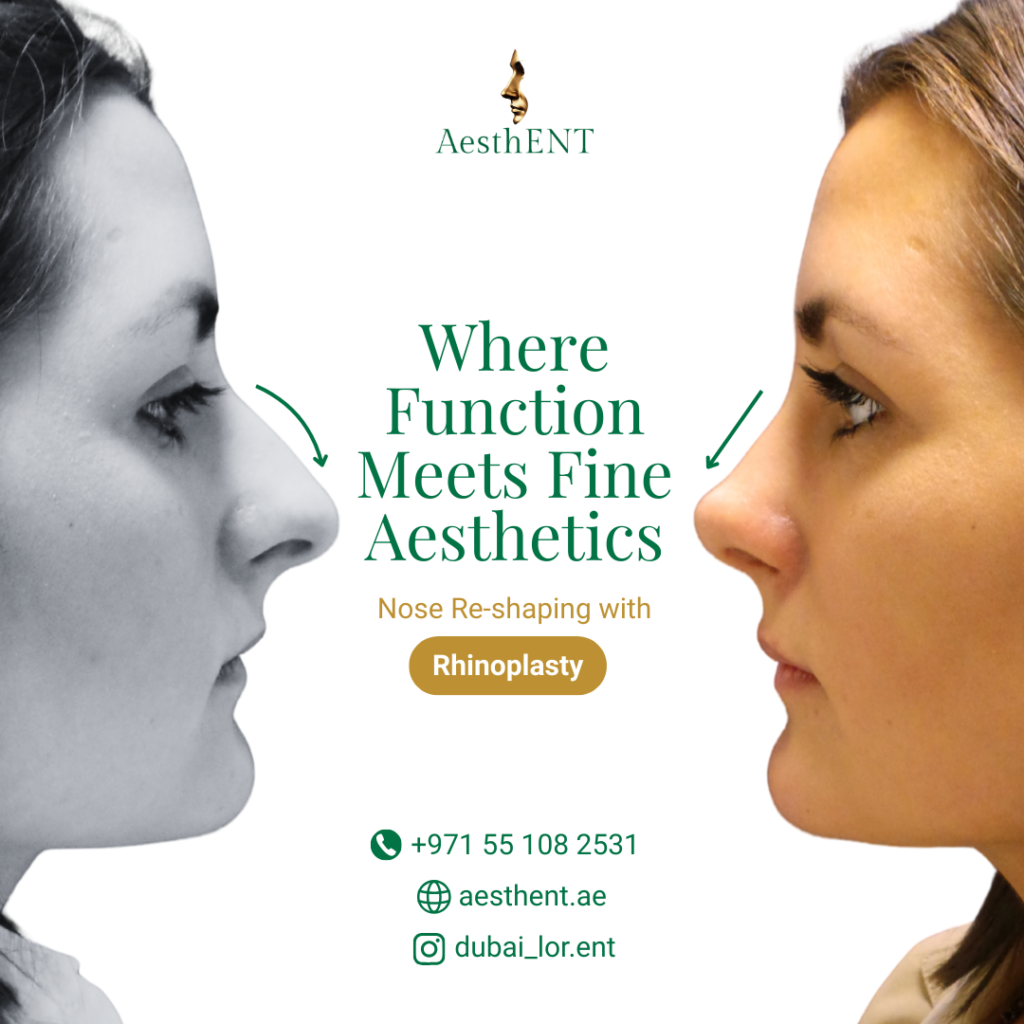
Whether your concerns are cosmetic, functional, or both, a personalised consultation is the first step toward finding the most appropriate treatment plan. At AesthENT Dubai, every patient benefits from a comprehensive facial and nasal assessment designed to achieve natural-looking results while preserving optimal breathing function.
